Platform Development Lifecycle and Deployment Architect Study Guide
Every topic objective in the Development Lifecycle and Deployment Architect exam explained thoroughly. The most efficient way to study the key concepts in the exam.
Last Updated: August 2026

The overview
This is the starting point for your study, covering all of the exam guide objectives.
The Salesforce Platform Development Lifecycle and Deployment Architect Study Guide incorporates all 25 Objectives within all 8 Sections of the official Salesforce Platform Development Lifecycle and Deployment Architect Certification Exam Guide.
What's included?
- Covers all 8 Sections of the official Salesforce Certification Exam Guide
- Explains in detail all objectives within each section (a total of 25 objectives)
- Topic summaries that you can use to learn the topics efficiently
- Topic videos for selected topics by Guest Instructors explaining topics in detail
- Explanations in plain English, with screenshots and diagrams rather than endless, unremarkable text
- Easy to read bullet points
- Dynamic Code Exercises (for a realistic, hands-on coding experience)
- Easy to read bullet points
- Includes links to lots of extra resources for further reading
- Scenarios and requirements with sample answers to test your ability to determine solutions
- Unlimited Access and Updates for 12 months
Everything you need to prepare for Salesforce Platform Development Lifecycle and Deployment Architect Certification
In order to pass the Salesforce Platform Development Lifecycle and Deployment Architect Specialist certification, you’ll find that knowledge and experience of the Salesforce platform aren’t enough. You also need to get to grips with the exam itself.
That’s why we created the Platform Development Lifecycle and Deployment Architect Study Guide.
Our study guide will help you understand confusing or difficult concepts from the official Salesforce Platform Development Lifecycle and Deployment Architect Certification Exam Guide and brush up on your skills – all in a format that’s easy to digest and has been proven to work with thousands of happy customers.
The Platform Development Lifecycle and Deployment Architect Study Guide will help you focus on the key points you need to know to pass the exam.
The Salesforce help pages and videos are great when you want to know all the details, but the Platform Development Lifecycle and Deployment Architect Study Guide provides a summary of all topics in study guide format.
Each lesson in our study guide contains individual Topic pages that are assigned to each objective.
Why this guide is important?
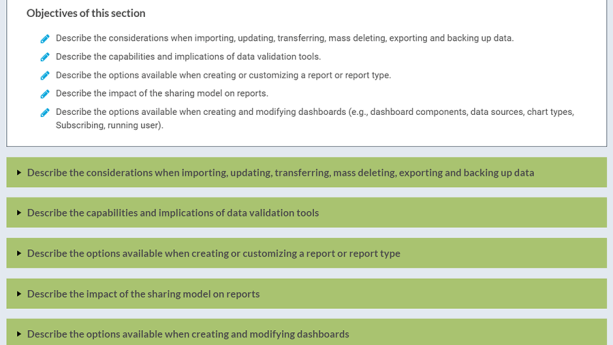
Our study guide summarises the key certification objectives in plain English, using examples, diagrams, charts and topic reviews to make sure you’ve cemented your understanding.
The Platform Development Lifecycle and Deployment Architect Certification Study Guide includes screenshots, summary points and diagrams to illustrate key concepts, as well as visually explain and demonstrate Salesforce functionality.
Course content
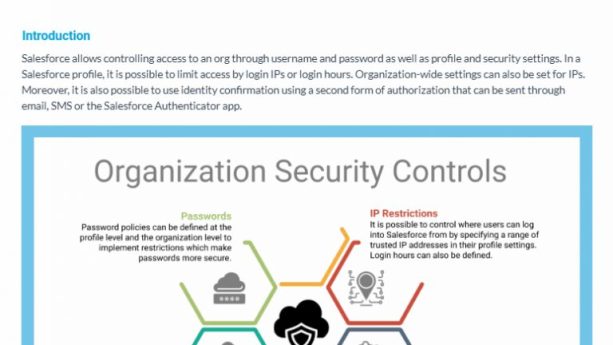
8 sectionsApplication Lifecycle Management 2 topics
- Given the project risk and customer requirements, explain how to assess the benefits and risks of the different development methodologies and recommend the appropriate governance strategies based on the customer maturity.
- Knowledge Check
Planning 5 topics
- Given a complex customer scenario, assess ALM maturity and identify the people, technology, and processes required.
- Understand customer environment risks and articulate appropriate mitigation strategies.
- Given a customer scenario, analyze and recommend the appropriate governance framework.
- Given a customer scenario involving a new Salesforce release (Summer, Winter, Spring), recommend the appropriate strategy to mitigate risks.
- Knowledge Check
System Design 5 topics
- Explain the advantages of using agile tools to support an agile development process.
- Given a customer landscape and their requirements, evaluate business, technical, and architectural considerations which support the defined org strategy.
- Given a customer scenario, define an environment (sandbox) strategy that utilizes the correct sandbox types. (e.g. multiple project streams, training requirements, staging, production, and hotfixes).
- Given a scenario, compare, contrast and recommend the components and tools of a successful deployment strategy.
- Knowledge Check
Building 5 topics
- Given a customer scenario, explain how source control branching/versioning/merging can be used and recommend appropriate strategies.
- Describe the appropriate approaches to building test data strategy and unit test to ensure successful code (positive, negative, permission-based, large data volume).
- Given a customer scenario, describe the appropriate development model (org-based vs package-based) and development environment (scratch org vs sandboxes).
- Describe the methods to ensure the delivery of quality code, such as coding standards, pull requests, code review and static code analysis.
- Knowledge Check
Deploying 4 topics
- Given a scenario, describe the capabilities, limitations and considerations when using the Metadata and Tooling APIs for deployment.
- Given a scenario, describe approaches to handle pre and post deployment steps, including items not supported via the APIs.
- Given a scenario, describe and recommend an approach to manage and deploy technical reference data - configuration stored as object data.
- Knowledge Check
Testing 4 topics
- Given a customer scenario, describe and recommend an appropriate testing methodology.
- Given a customer testing strategy, describe the appropriate test execution methodology and coverage requirements.
- Given a customer scenario, describe and recommend a unified test data strategy that utilizes representative data in a secure manner throughout the development lifecycle.
- Knowledge Check
Releasing 4 topics
- Given a scenario, analyze and explain the use cases and considerations when using managed and unmanaged as well as unlocked packages.
- Apply map sandbox strategy to a specific Release Plan, taking into consideration multiple project streams, training requirements, staging and hotfixes.
- Given a customer scenario, describe and recommend an appropriate release management strategy.
- Knowledge Check
Operating 4 topics
- Given a detailed customer environment scenario including a specific request, explain the implications for incorporating the request directly in a production environment.
- Given a customer scenario where changes are made directly in production, explain the implications on the development lifecycle and steps to integrate changes into Application Lifecycle Management.
- Given a multi-org customer scenario, compare and contrast approaches for managing common release artifacts.
- Knowledge Check
Take the tour
What our students say
Gain essential and valuable skills from a recognized leader in Salesforce to future-proof your career and stand out to leading employers.
Why choose us?
Gain essential and valuable skills from a recognized leader in Salesforce to future-proof your career and stand out to leading employers.
Frequently asked questions
Everything you need to know before buying our study guide
What release are the study guides based on?
The study guides are updated shortly after each release. You will get any release updates for free during the 1 year of access after purchase.
Is there a limit for access to the study guides?
You will have unlimited access to this study guide for 12 months from your date of purchase. Plus, any updates or release changes made to the material during your year of access are included.
What is included in a K2 University Study Guide?
Study guides cover all sections of the official Salesforce Certification Exam Guide, explaining all objectives in detail with topic summaries, explanations in plain English, screenshots, diagrams, easy-to-read bullet points, links to extra resources for further reading, and scenarios with sample answers.
Popular Salesforce Courses
Discover courses tailored to your learning journey.